

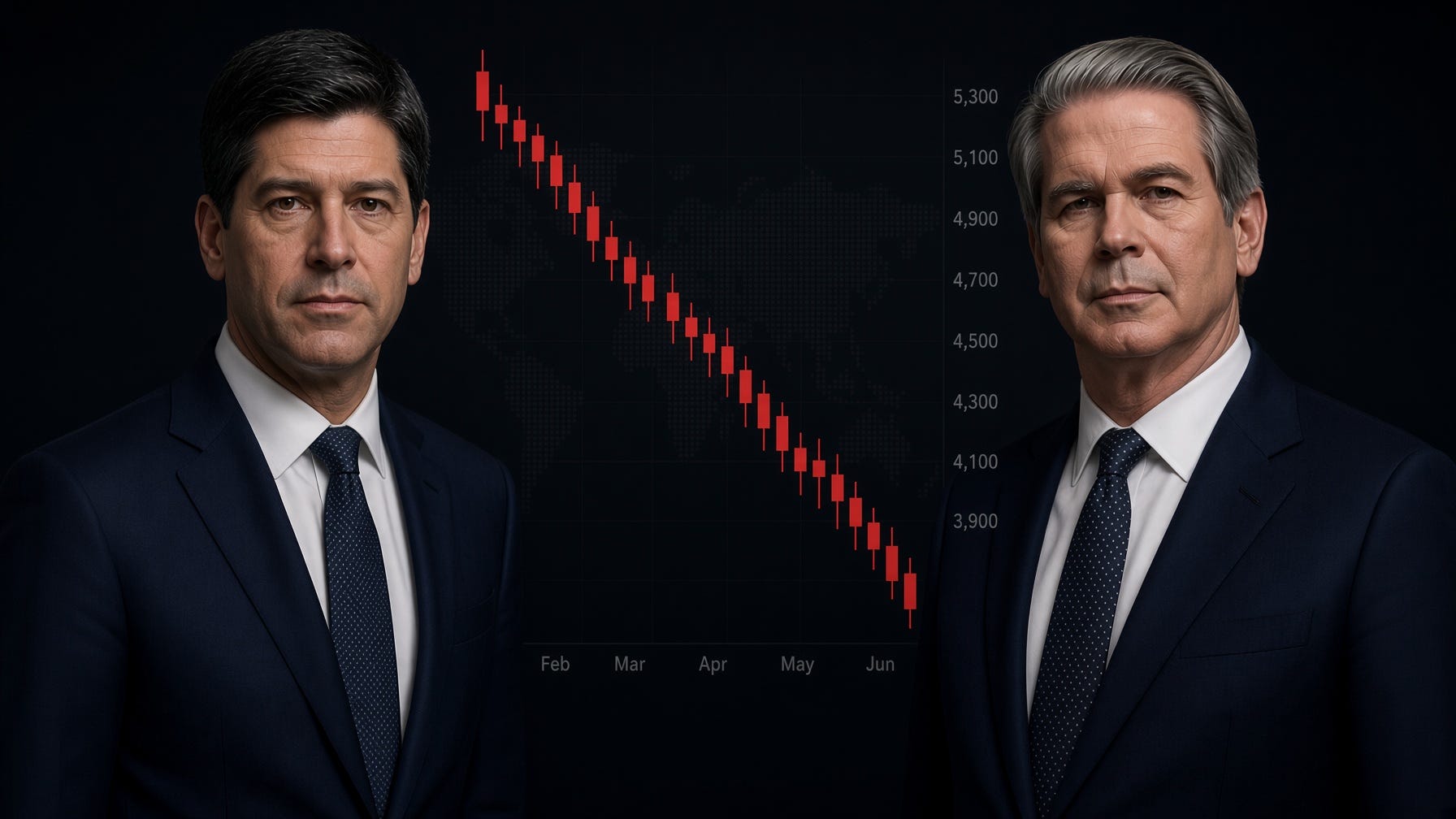
Kevin Warsh’s much anticipated first Jackson Hole Symposium speech was along the lines of the previous 2 FED pressers. Inflation is way above target and the FED may well need to address that, if improvement does not arrive swiftly.
The result was USD higher along with rates. USD/YEN back to 1.600 and UST10 back at 4.73%, reversing Bessent’s YEN and longer bond interventions.
Is the US really in a financial civil war between the government and central bank? They may not be fighting each other exactly, as far as we can tell, but the outcomes they desire cannot coexist. Someone has to lose. Sadly it’s the country that will lose. Lose its empire.
Much was made by Warsh of the 2 mandates of full employment and stable prices but, as we talked about in the podcast last week, the third, much less well known mandate of “moderate long-term interest rates” has yet to be pulled out of the bag.
But it was there in the speech, if you looked closely, and linked to money supply:
“Fifth, short-term interest rates are the predominant tool to achieve the dual mandate. Unconventional policies to spur economic activity may suit genuine crises but should otherwise be used sparingly, if at all.
Sixth, money matters. It’s not fashionable these days, but my view is that money has something important to do with monetary policy. We should pay attention to money created by the central bank and money that comes from the banking and financial systems. It’s true that financial innovations and other factors alter the mechanics that link the monetary base, the velocity of money, and the broader economy. But that is scarcely a reason to ignore the ultimate effects of money on financial conditions and prices.”
See the podcast here